The Violence We Choose Not to See
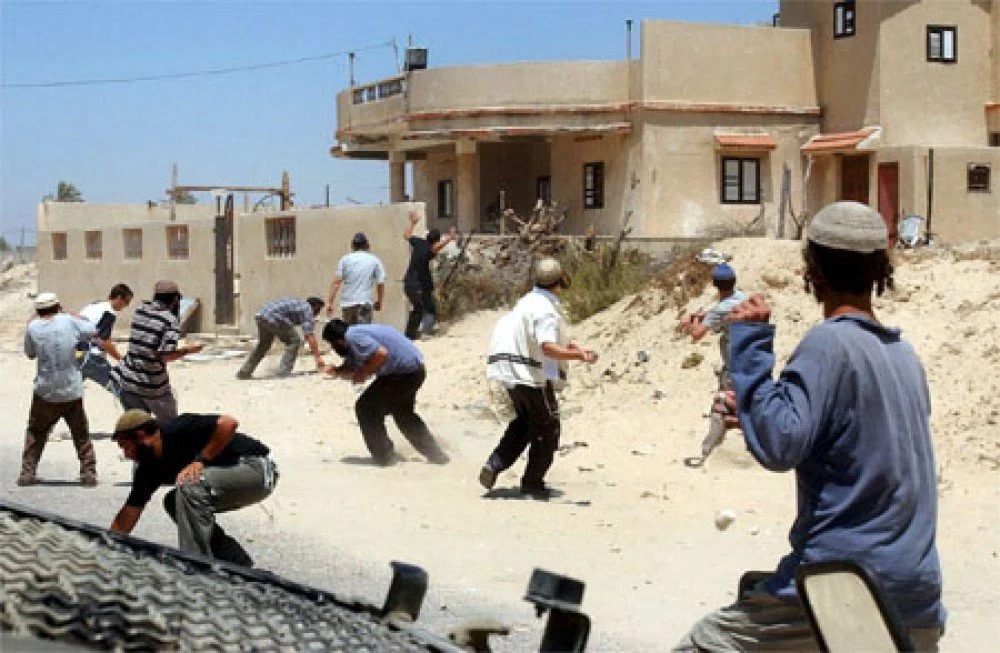
Why settler attacks in the West Bank keep happening – and keep going unpunished: a social science lens
Opinion by Aya Khayat
Six times a day, on average, a settler attack in the West Bank causes injury or property damage; the UN calls 2026 the worst year on record. Since 2023, over 6,000 Palestinians have been displaced by these attacks, nearly half of them children. We tend to file this under "extremism" – a few fanatics acting alone. It's a comforting story because it makes violence an aberration. Sociology tells a less comforting one: about how a society quietly decides whose safety counts.
Let’s start with one number: 3%. That’s the share of the more than 1,700 settler-violence investigations opened by the Israeli police since 2005 that have ever ended in conviction, per Yesh Din. Most close for an "unidentified suspect," even when attacks happen in daylight, on camera, or in front of soldiers. Crimes by Israelis against fellow Israelis in the same territory are prosecuted at more than double that rate. One uninvestigated attack might be incompetence. Sixteen hundred of them, in twenty years, is a pattern — and it's worth asking why Israeli sociology, so rigorous about everything else in the country, has historically treated the occupation as peripheral, as scholars like Yehuda Shenhav and Sami Smooha have themselves asked.
There's a reason for that pattern, too. Anthropologists studying political violence elsewhere have found that when harm becomes routine enough, communities stop experiencing it as events and start experiencing it as weather. Yesh Din's own data shows this: between 2023 and 2024, the share of victims who didn't even file a complaint rose from 60% to 66%, most citing distrust. Psychologist Albert Bandura called the flip side of this “moral disengagement”- the language and diffused responsibility that let ordinary people reclassify harm as reasonable without ever seeing themselves as extremists. That's what makes it durable.
Pierre Bourdieu said sociology's real job is to expose the boring bureaucratic mechanisms that keep injustice running: budgets, filing procedures, habits of not asking questions. That's exactly what sustains settler violence; a closed file, an unfiled report, a soldier who doesn't intervene, repeated until it stops looking like choices and starts looking like landscape.
To be fair, many Israelis describe these incidents as isolated self-defense, not policy. That view struggles to explain a twenty-year, 3% conviction rate. Consistent patterns aren't explained by individual incidents, they're explained by structure. Naming that structure doesn't fix it, but it's where accountability must start.
Long version below
Six times a day, on average, somewhere in the West Bank, an Israeli settler attack causes injury or property damage.
That is not an estimate from an activist pamphlet, it is the figure the United Nations gave the Security Council this year, describing 2026 as the worst year on record for settler violence since documentation began two decades ago. In March alone, close to 170 Palestinians were injured by settlers, more than in any single month since monitoring started. Since January 2023, over 6,000 Palestinians have been displaced from their homes because of these attacks and the access restrictions that come with them, nearly half of them children.
Numbers like these tend to get filed, in the public imagination, under “extremism”: a small number of violent fanatics, acting alone, embarrassing everyone else. It's a comforting story, because it means violence is an aberration rather than a pattern. But a look through the lens of sociology and anthropology tells a different, more uncomfortable story, one about how society quietly decide whose safety counts, and how that decision, repeated enough, hardens into structure.
The paperwork of impunity
Let’s start with a number that says more than any headline: 3%. That is the share of investigations into settler violence against Palestinians, out of more than 1,700 opened by Israeli police since 2005, that has ever ended in a conviction, according to two decades of monitoring by the Israeli human rights group Yesh Din. Roughly 94% of these files are closed without even an indictment, and in the majority of those, police simply report that they could not identify a suspect, despite attacks often happening in daylight, in front of soldiers, or on camera. Crimes committed by Israelis against fellow Israelis in the same territory, by contrast, are indicted at more than double the rate.
This is where sociology becomes more useful than moral outrage. An attack that goes uninvestigated once might be incompetence. An attack that has been uninvestigated 1,600 times, for twenty years, across different governments, is a pattern. And it's worth asking why Israeli sociology itself, a discipline that has produced serious, critical work on almost every other feature of Israeli society, has historically struggled to treat the occupation as a central object of study rather than a peripheral one. In 2008, sociologist Yehuda Shenhav wrote a short, pointed essay, “Sociologists and the Occupation,” devoted explicitly to asking why the discipline had contributed so little to understanding the occupation, compared to how thoroughly it had studied nearly everything else about the country. The same special issue included a companion piece by sociologist Sami Smooha bluntly titled “Has the Occupation Really Seeped In?”- questioning how much the decades-long control of millions of people had actually entered Israeli sociological analysis as a structuring fact, rather than a footnote. If the discipline built to explain Israeli society has treated the occupation, and the violence that sustains it, as marginal to what it studies, it becomes much easier to understand why the broader public treats settler attacks the same way: as scattered incidents rather than as a load-bearing feature of the system.
Violence that becomes background noise
Anthropologists who study political violence elsewhere in the world, from South Africa's townships to Central America's civil wars, have long noted that when harm becomes routine enough, communities stop registering each incident as an event and start experiencing it as weather: a constant, low-grade condition of life rather than a series of discrete crimes. That shift matters, because it changes what victims do next. Yesh Din's own data shows the effect happening in real time: between 2023 and 2024, the share of Palestinian victims of settler violence who didn't even bother filing a police complaint rose from roughly 60% to 66%, most citing plain distrust that anything would come of it. When a society's institutions repeatedly fail to respond to harm, the people being harmed eventually stop asking them to.
This is also how ordinary people come to participate in, or tolerate, violence they might otherwise recognize as wrong. The psychologist Albert Bandura called this moral disengagement: through language ("clearing an area," "defending land") and through diffusion of responsibility across soldiers, settlers, and policymakers, each of whom can say the outcome wasn't really theirs to prevent, harmful acts get reclassified as reasonable, even necessary. None of this requires anyone to think of themselves as a violent extremist. That is precisely what makes it durable.
Why sociology has to say the uncomfortable thing
Pierre Bourdieu once described real sociology as a discipline that disturbs the peace, that its job is not to soothe audiences with familiar stories but to expose the ordinary, boring mechanisms that keep injustice running quietly in the background: budgets, filing procedures, boundary lines, habits of not asking questions. That's the opposite of what a discipline does when it quietly avoids a topic, as Shenhav and Smooha argued Israeli sociology had done with the occupation. Settler violence in the West Bank is sustained by exactly this kind of ordinary machinery, an investigation closed for lack of a suspect, a displaced family that doesn't file a report, a soldier standing nearby who does not intervene, repeated thousands of times until it stops looking like a series of choices and starts looking like the landscape itself.
To be fair, this isn't the only lens available. Israeli officials and many settlers describe individual incidents as isolated acts of self-defense in a genuinely dangerous security environment and reject the claim that state policy tolerates or encourages violence. That framing deserves acknowledgment, but it struggles to explain a twenty-year, multi-government pattern of a 3% conviction rate, or a discrepancy in indictment rates between crimes against Israelis and crimes against Palestinians in the very same territory. Patterns that are consistent are not explained by individual incidents; they are explained by structure.
That is the real contribution social sciences can make to this conversation: not another account of what happened this week, but an explanation of why it keeps happening, and why it is allowed to. Understanding a mechanism doesn't fix it. But naming it correctly is where accountability must begin.
References
Amnesty International. (2026, June). West Bank displacement report.
Bandura, A. (1999). Moral disengagement in the perpetration of inhumanities. Personality and Social Psychology Review, 3(3), 193–209.
Bourdieu, P. (2005). Science that disturbs the peace. Polity Press.
Smooha, S. (2008). Has the occupation really seeped in? Israeli Sociology, 9(1).
Shenhav, Y. (2008). Sociologists and the occupation. Israeli Sociology, 9(1), 263–270.
United Nations Office for the Coordination of Humanitarian Affairs (OCHA). (2026). Humanitarian Situation Reports.
Yesh Din. (2025). Law enforcement on Israeli civilians in the West Bank (Settler Violence), 2005–2025.